
Nigeria TV Info
Iran to Choose New Leader Soon as Attention Turns to Ayatollah Khamenei’s Likely Successors
Iran may soon enter one of the most important political transitions in its modern history as speculation grows over who could succeed Supreme Leader Ayatollah Ali Khamenei. The country’s leadership is under pressure to identify a successor, a decision that will shape Iran’s domestic policies, regional influence, and relations with the West for years to come.
Under Iran’s constitution, the next supreme leader is selected by the Assembly of Experts, an 88-member body of senior clerics tasked with appointing and supervising the country’s highest authority. The position carries immense power, including control over the military, judiciary, state media, and key political decisions.
Leading Figures Seen as Possible Successors
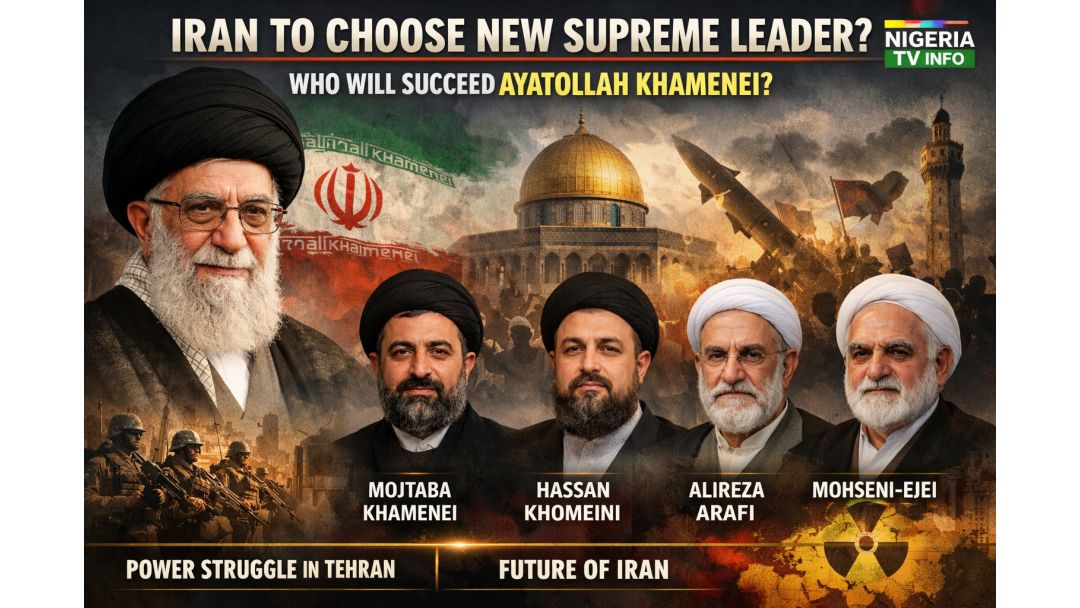
Mojtaba Khamenei
One of the most widely discussed contenders is Mojtaba Khamenei, the influential son of the current supreme leader. He has strong connections with conservative clerics and the Islamic Revolutionary Guard Corps (IRGC). However, critics warn that his appointment could be seen as establishing a hereditary political system in a state founded on revolutionary ideology.
Hassan Khomeini
Hassan Khomeini, the grandson of Iran’s founding revolutionary leader Ayatollah Ruhollah Khomeini, is viewed as a more moderate candidate. Known for supporting social freedoms and diplomatic engagement with the West, he may attract backing from reformist factions within Iran’s political establishment.
Alireza Arafi
Senior cleric Alireza Arafi is another prominent figure. He holds a seat on the Guardian Council and oversees major religious institutions in Qom, Iran’s spiritual center. His deep ties to the clerical establishment make him a strong conservative option.
Mohammad Mehdi Mirbagheri
Mirbagheri represents the ultra-conservative wing of Iran’s religious elite. As a member of the Assembly of Experts and head of the Islamic Sciences Academy, he has support among hard-line factions advocating a more rigid ideological approach to governance.
Gholam-Hossein Mohseni-Eje’i
Iran’s judiciary chief is also mentioned among potential contenders. Known for his hard-line stance and long service within the Islamic Republic’s security and legal structures, he is seen as a loyalist to the current leadership.
A Decision That Could Shape Iran’s Future
The choice of Iran’s next supreme leader will likely influence the country’s nuclear policy, regional alliances, and response to domestic protests. Analysts say the succession could either reinforce the dominance of conservative factions or open space for more pragmatic political leadership.
With Iran facing economic pressures, regional tensions, and internal political divisions, the coming decision is expected to have major implications for both the Middle East and global geopolitics.
Comments