
Nigeria TV Info
Iran’s Strike on Israel Signals Growing Confidence in Regime Resilience Amid Regional Escalation
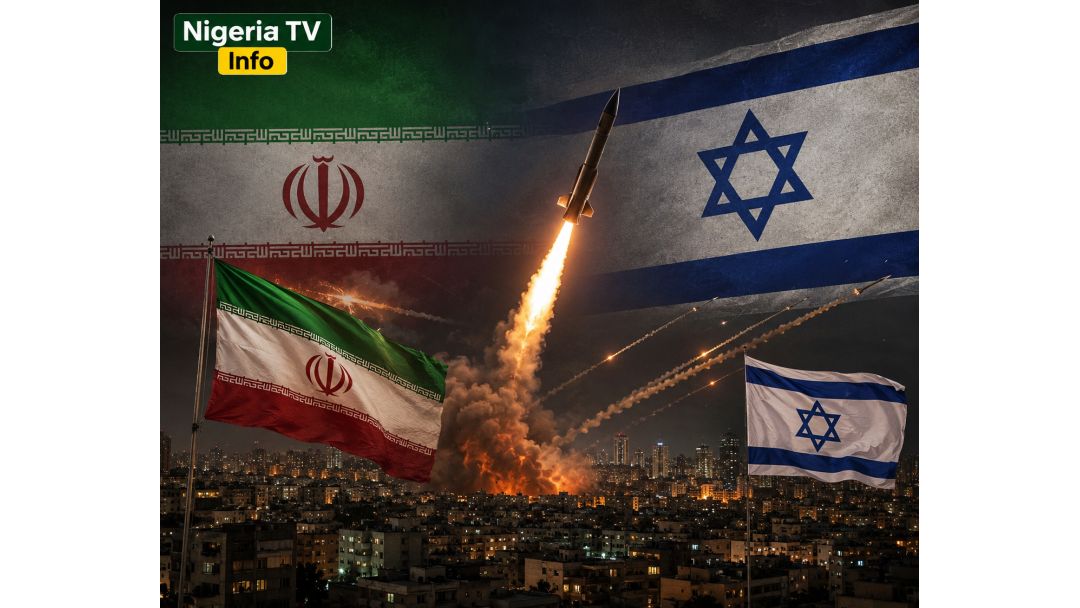
Iran’s recent missile and drone strike on Israel marks a notable escalation in the ongoing Middle East confrontation, suggesting that Tehran’s leadership is increasingly willing to absorb retaliation risks while projecting strength across the region. Analysts say the move reflects not just military calculation, but a broader signal of political confidence and regime resilience.
The strike came in response to Israeli actions against Iranian-linked targets in Lebanon and elsewhere in the region. While the immediate military impact was limited, its strategic meaning is being closely examined by observers who see Iran’s decision to directly engage Israel as a shift in posture.
According to regional analysis, Iran’s leadership appears to be leveraging such operations to demonstrate endurance under pressure and reinforce its standing within the so-called “Axis of Resistance,” which includes allied groups in Lebanon, Iraq, Gaza, and Yemen.
At the same time, reports indicate that Iran’s actions are being framed domestically as retaliation and deterrence, aimed at signaling that external strikes will not weaken its regional influence or internal cohesion.
Despite the escalation, there is no clear evidence of internal regime instability in Tehran. Instead, some assessments suggest the leadership has tightened control while using external confrontation to reinforce domestic unity.
However, the situation remains fluid. The exchange of strikes between Iran and Israel has raised fears of wider regional spillover, especially involving proxy groups and key maritime routes such as the Red Sea and the Strait of Hormuz, both critical to global trade and energy flows.
Diplomatic efforts, including calls for de-escalation and temporary pauses in hostilities, have not fully stabilized the situation, with both sides reserving the right to respond to future attacks.
Comments